




The Power of Tax Deferral: How It Can Boost Your Retirement Savings
If you are counting on investments to build your retirement funds, you know that they are taxed every year, which means a portion of your gains is taken out before that portion ever has the chance to grow. Over time, the annual tax drag can significantly limit how much you build for retirement.
Tax deferral changes that. It allows your money to continue compounding without being reduced by yearly taxes. And it delays the tax bill until you begin taking withdrawals later in life — often during retirement, when many people are in a lower tax bracket. The portion of withdrawals that were gains is taxed upon the point of withdrawal.
That’s the growth advantage tax-deferred annuities are designed to provide.
How Tax Deferral Works in Annuities
Because annuities are designed as a long-term product, tax deferral allows your earnings to grow without annual reductions for taxes. Over time, this uninterrupted compounding can lead to a higher total balance than a comparable amount in a taxable investment.
However, putting your money into an annuity also means you have less access to your money before retirement. A surrender charge period is common to annuities, but some also allow certain amounts for withdrawal each year without penalty. Depending on the structure of the annuity, penalties may be charged for withdrawing more within the first 5-10 years.
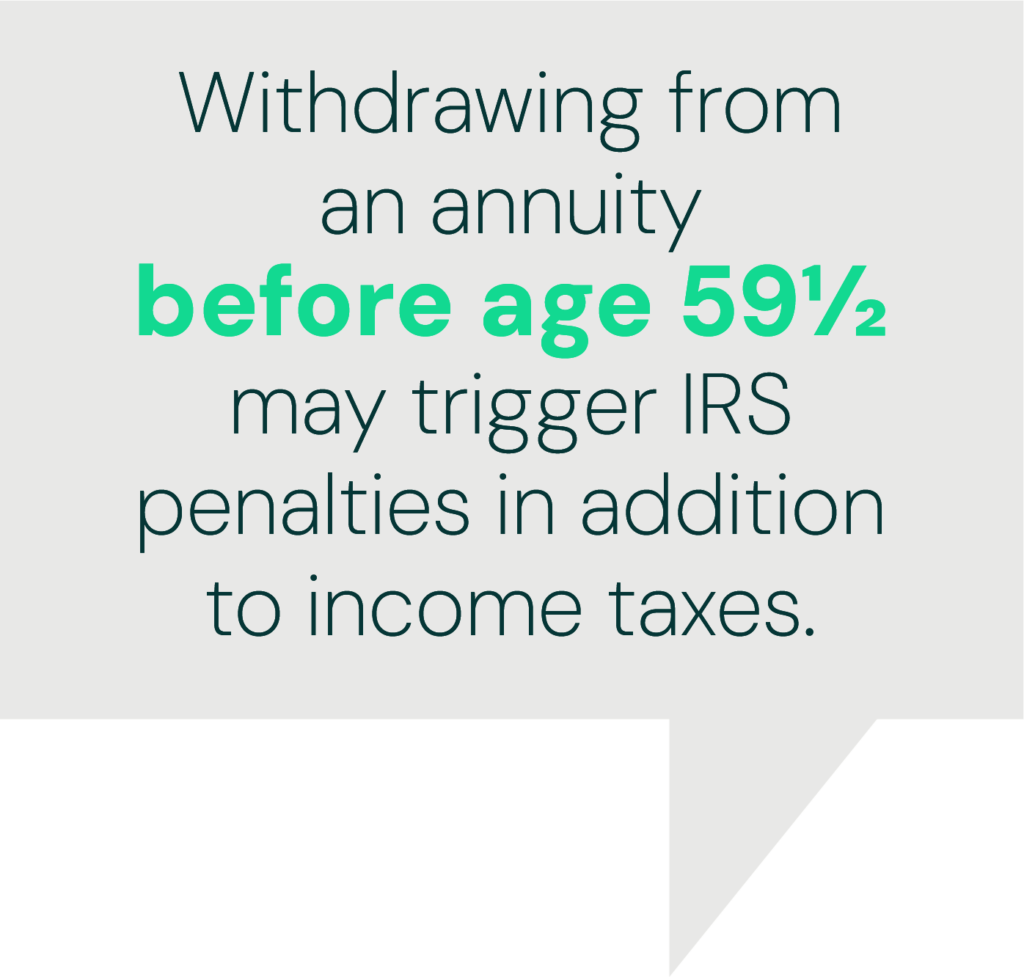
Withdrawing monies from an annuity before age 59½ may trigger IRS penalties in addition to income taxes in your current tax bracket. That’s why annuities are best suited for individuals who don’t need immediate liquidity and want to build a future income stream.
Key Benefits of a Tax-Deferred Annuity
- Maximized growth potential — More of your money remains secure and compounding
- Flexibility in tax timing — You choose when to withdraw and potentially lower your tax load in the future
- Predictable retirement income — Many annuities can convert available funds into guaranteed lifetime income*
While tax deferral is a powerful tool, it should always be evaluated as part of your overall retirement strategy.
Who Should Consider a Tax-Deferred Annuity?
A tax-deferred annuity may be a smart choice if you:
- Want to take advantage of compounded growth over time
- Expect to be in a lower tax bracket in retirement
- Are putting aside money for retirement but don’t need income immediately
Key Takeaways
- Tax deferral allows earnings to compound without annual tax reduction
- Over time, compounding can significantly increase annuity account balances
- Annuities are best suited for long-term planning due to early withdrawal penalties
- Many annuities offer options for guaranteed lifetime income
- The right strategy balances growth, access, and future income needs
Keep More of What You Earn
Tax deferral can be a powerful advantage in building greater retirement security.
If you’d like to explore how an annuity might fit into your retirement plan, speak with a financial professional to review your options.
Don’t have a financial professional? Learn more here.
Related Posts

Why Fixed Indexed Annuities Shine When Interest Rates Drop
Discover why Fixed Indexed Annuities (FIAs) remain a strong retirement strategy—even in a low-interest-rate environment. Learn how FIAs offer principal protection, growth potential, and guaranteed income.

Don’t Fall For It: Ways to Help Spot and Stop Financial Scams
Learn ways to recognize and avoid common financial scams. Discover practical tips to help you and your loved ones stay alert, informed, and protected from fraud.

What Is a Fixed Annuity? Why One Size Doesn’t Fit All
Discover what fixed annuities are and how their flexibility can meet a wide variety of retirement needs through income features, riders, and tax treatment.
*Guarantees rely on the financial strength and claims-paying ability of the issuing insurer.
GIPUB-005 01-25