

Sharpen Your Competitive Edge
13 Essential Skills Financial Professionals Need to Successfully Serve the Next Generation
Help gain and retain Gen X, Millennial, and Gen Z clients

The next generation of clients is redefining what they value in a financial professional. Technical expertise alone is no longer enough to build trust or loyalty.
Today’s investors— Gen X, Millennials, and Gen Z—want guidance that feels personal, empathetic, and rooted in understanding their lives as much as their finances.
They’re drawn to financial professionals who combine financial acumen with human connection.
The skills featured here are ones that resonate with these younger generations — skills that make advice feel personal, relatable, and human.
This collection brings together curated insights from across the industry on the human-centric capabilities that will shape the future of advice. Each article highlights a distinct way to strengthen the skills AI can’t replicate—listening, empathy, communication, adaptability, and more.
Explore these perspectives to sharpen your competitive edge and position yourself as the kind of financial professional every generation wants in their corner — especially Next Gen.
JUMP TO:
Skill 1
Critical Thinking
In a world where information is abundant but wisdom is scarce, critical thinking separates insight from instinct. It’s what allows financial professionals to pause before reacting—to question assumptions, test information, and evaluate decisions from every angle.
The article below explores practical ways to strengthen this mindset through observing, analyzing, reasoning, and communicating more effectively.

Skill 2
Adaptability to Change
Nowhere is that more true than in financial services, where new technology, regulations, and client expectations are reshaping how advice is delivered.
Adaptability is more than keeping pace with innovation—it’s about seeing change as opportunity. For financial professionals, that means embracing continuous learning, leveraging new tools, and meeting clients where they are—often digitally.
The article below explores how cultivating adaptability builds both efficiency and trust, helping you stay relevant and resilient in an industry that rewards forward-thinking.

Skill 3
Creativity
In finance, creativity isn’t about art—it’s about innovation. It’s what turns complex challenges into fresh opportunities and drives progress in an industry often defined by rules and routines.
For financial professionals, creative thinking fuels better problem-solving, helps navigate uncertainty, and sparks new ways to serve clients. It also builds a culture of curiosity and openness that today’s Next Gen investors value.
The article below explores how creativity—when nurtured intentionally—can enhance leadership, inspire teams, and help financial professionals stand out in an increasingly competitive field.

Skill 4
Interpersonal and Communication Skills
Strong communication is what turns information into understanding—and clients into advocates.
For financial professionals, it’s more than presenting facts clearly; it’s about creating genuine connections through listening, empathy, and tailored interaction.
The article below highlights how mastering communication builds trust, loyalty, and long-term relationships. From active listening and translating industry jargon into plain language to leveraging technology for seamless client touchpoints, it shows that clear, authentic communication is what sets great professionals apart.

Skill 5
Navigating Tough Conversations
Few moments test a financial professional’s empathy and communication skills like a difficult conversation.
Whether it’s discussing topics such as illness, divorce, or financial loss, these moments demand honesty, tact, and care.
The article below explores how building trust, listening with intention, and asking thoughtful questions can turn uncomfortable discussions into opportunities for deeper understanding. It offers guidance for introducing sensitive topics, managing emotions, and communicating with clarity and compassion.
For Next Gen clients who value authenticity and transparency, mastering this skill demonstrates both emotional intelligence and leadership—the kind of qualities that strengthen loyalty for the long term.
Listening is one of the most underestimated skills in financial advice—and one of the most powerful.
Too often, advisors dominate conversations, eager to demonstrate expertise instead of curiosity. But clients—especially Next Gen investors—want a guide who listens first, understands their concerns, and then responds with empathy.
This article explores why great communication starts with silence, self-awareness, and restraint.
It offers practical ways to talk less, listen more, and turn each conversation into an opportunity to deepen understanding and trust.
Skill 7
Empathy
Empathy is the bridge between expertise and trust. It’s what allows financial professionals to step into a client’s world, understand their perspective, and respond with sensitivity and care.
The article below explores how empathy strengthens relationships, builds rapport, and helps financial professionals navigate the emotional side of financial decision-making.
It also outlines practical ways to develop empathy—through active listening, role-playing emotional scenarios, and broadening perspectives through new experiences.
For Next Gen clients who expect a planner to “get” both their goals and their values, empathy is what transforms financial advice from transactional to deeply personal.
Skill 8
Emotional Intelligence
Emotional intelligence is the foundation of every great client relationship. It’s the ability to recognize, understand, and manage emotions—your own and your clients’—to communicate with empathy, navigate challenges, and build lasting trust.
The article below explores new research showing that emotional intelligence (EI) is among the most sought-after traits clients look for in an advisor.
It also offers practical ways to strengthen EI through self-awareness, active listening, and reflection.





Skill 9
Asking Better Questions
Skill 10
Behavioral Coaching
Behavioral coaching helps clients make financial decisions that align with their goals and values—especially during times of stress or uncertainty. By understanding the emotional and psychological factors behind client behavior, financial professionals can guide more rational, values-based decision-making.
The article below explores how behavioral coaching creates self-awareness, strengthens emotional intelligence, and builds consistency between clients’ intentions and actions.
For Next Gen clients, who seek purpose and alignment as much as performance, this approach transforms the financial professional’s role from strategist to true partner in their financial and personal growth.

Skill 11
Incorporating Financial Psychology Techniques
For Next Gen clients who expect personalized guidance and holistic advice, financial psychology transforms planning into an experience that feels deeply understood, empowering, and built around their real lives — not just their portfolios.

Skill 12
Storyselling
Instead of leading with charts or product features, storyselling invites clients to see themselves in the narrative: their challenges, their turning points, and their goals achieved with your help.
The article below explains how to use storyselling to simplify complex ideas, strengthen emotional engagement, and make your message more memorable.
For Next Gen clients—who crave authenticity and connection—storyselling isn’t just a marketing technique; it’s how trust is built.
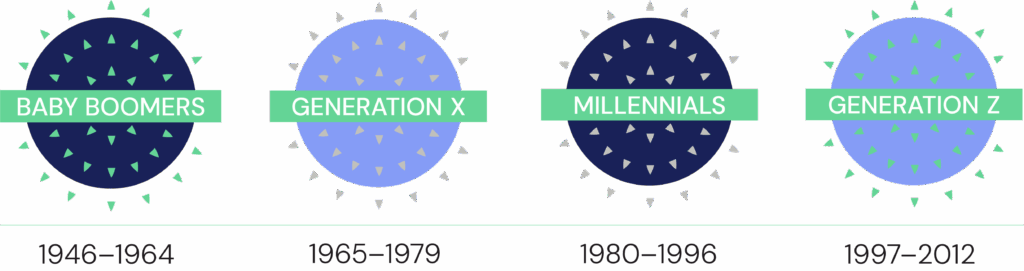
Each generation sees money—and the role of a financial professional—through a different lens. Understanding those differences is the key to connection.
From Baby Boomers passing on wealth to Gen X and Millennials navigating the pressures as the “Sandwich Generation” and Gen Z seeking purpose-driven financial planning, generational awareness helps financial professionals personalize conversations, advice, and communication styles to resonate with every client they serve.
This article explores how social, economic, and technological experiences shape each generation’s attitudes and expectations.
For financial professionals, bridging these generational gaps isn’t just about keeping up with change — it’s how you build relevance, strengthen trust, and gain a lasting competitive edge with both current and future clients.
Win With Next Gen
The financial industry is undergoing a generational shift — one that will define the next era of advice. The professionals who rise to meet it won’t be those who rely solely on technical expertise, but those who master the human side of advice.
Skills like empathy, communication, behavioral coaching, and emotional intelligence aren’t just nice-to-haves — they’re what will set you apart as client expectations evolve.
As AI transforms the way advice is delivered, and generational expectations continue to shift, developing these distinctly human capabilities has never been more critical. This is your defining opportunity to lead the change.
By strengthening the capabilities that technology can’t replicate, you’ll not only deepen connections with today’s clients — you’ll win with Next Gen.
See more ways to engage the next generation of clients.

Stories from the field
Find Success Serving Millennials
read time: 4 min

become gen savvy
Overcome the Roadblock to Next Gen
read time: 5 min

Reaching younger clients
Get seen, Heard, & Hired by Next Gen
read time: 16 min